

A few changes in your weekly shopping habits can help reduce food and packaging waste, improve human connection, increase competition, and even save you money.
Our shopping habits play a big role in supply and demand, our plastics consumption, and the kind of world we collectively create.
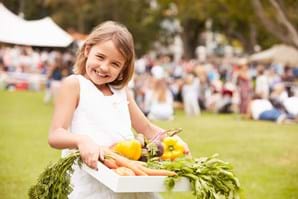 Shopping at farmers markets will likely induce the quintessential imagery of a woman with a woven basket over her shoulder as she carefully inspects fresh produce before making a selection, children licking ice cream as it dribbles down a cone, the smell of freshly brewed coffee and local honey producers selling their liquid gold. The jarring sound of shopping trolleys crashing against a supermarket aisle is replaced by the appealing hum of human interaction and perhaps some children playing in the distance. Under the shady canopy of trees or canvas marquees, the high-pitched pulse of fluorescent overhead lights is absent. Instead, the sun warms your skin and greenery lines the edges of the space rather than concrete walls.
For the sake of convenience, however, we more often find ourselves shopping at supermarkets. Often multiple times a week. We shake our heads at the cost when it’s all summed up and trundle off home in disbelief. Only to do it again a few short days later. And have you noticed it’s almost impossible to have a personal interaction at check-out these days? We are nudged toward self-checkout, face to face with yet another screen, no longer able to have an exchange with another human being. The automated voice on repeat ‘please take your shopping’ as you try to cram it all back into your reusable bags with not a single pleasantry exchanged.
In a world that is steadily edging away from in-person, human, messy, raw and organic, we must remember what is important. Keeping small business alive, supporting bricks and mortar shops, buying direct from producers and growers, these are all essential ways to hold on to our food sovereignty, human connection, and a healthy local and diverse economy. Do it all with extra attention to detail and you’ll easily reduce your plastic consumption too.
When we scoop fruit and veggies into our baskets at the markets, we reduce the pre-packaged shrink wrap that comes hand in hand with a supermarket purchase. When we buy from local producers, we can buy exactly how much we need (rather than buying pre-packaged, pre-determined quantities) which helps to not only eliminate food waste, but it also gives us fresher produce.
 Supporting local businesses can also often mean you are buying food that has travelled a shorter distance than produce found at Supermarkets. Fewer food miles means less packaging, fewer preservatives, and fresher food on your table too. Smaller batch producers will often specialise in seasonal produce in smaller quantities to maintain freshness. Over time you can develop relationships and connections with the face behind a business. Dealing directly with the owner of small business or a local producer gives you the opportunity to ask questions about farming practises and find out more about the food you are consuming.
Supporting small business and farmers directly is an essential step in keeping competition healthy, produce prices accessible and food security strong. If we stop supporting farmers, they will have no choice but to sell to wholesalers and supermarkets at much lower prices. An unsustainable long-term business model for most, many smaller producers eventually go out of business or have to cut costs to maintain profits.
In the farming sector, cost cutting often looks like increased pesticide usage and intensive agriculture. Over time, this erodes soil health, reduces pollinators, and impacts biodiversity and the resilience of local food systems. The end result? Less nutritious food, less competition, and higher prices, ultimately undermining long term food security for us all. Food sovereignty is critical for biodiversity, a healthy economy and access to heirloom and more unusual cultivars of food and other plant species.
As we move into a new year, consider how you will shop in 2026 and whether you can support local businesses. Keeping profits in the pockets of local producers does more than you might realise. It keeps competition and variety alive and well, helping to ensure prices remain fair and choice stays accessible to all.

Alison Gallagher is a freelance writer, resourcefulness expert and owner of aromatherapy business Alyssum Alchemy. She has been featured in various publications including Stellar Magazine, Australian Health and Fitness Magazine, and Cleo Magazine. Alison is particularly passionate about sharing practical tips on how to live simply, sustainably and seasonally.